


1
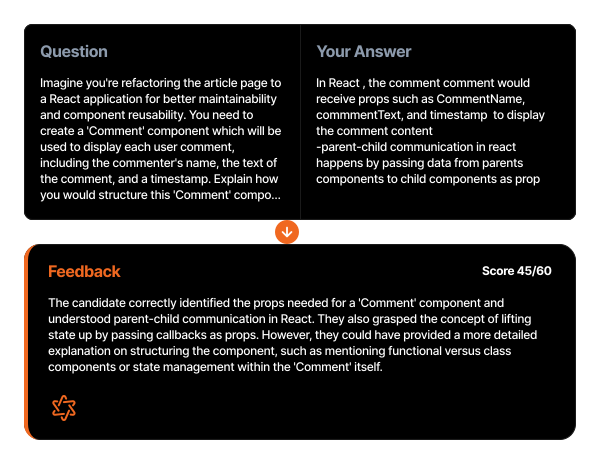
Real world scenario Questions
Innovative approach to check in-depth understanding
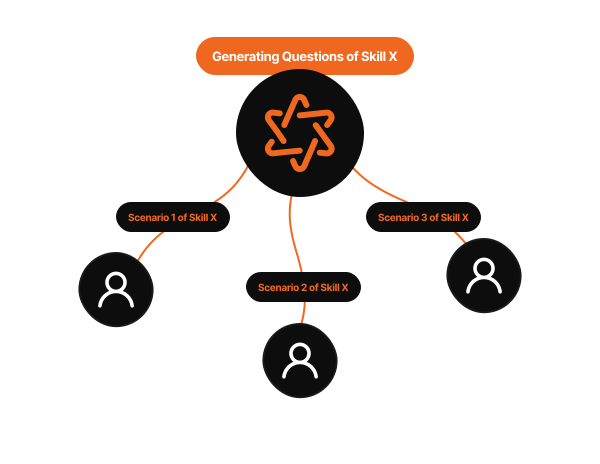
Each question presents a real-world scenario related to the skill you want to test, asking candidates to explain how they would solve the problem.
Schedule a Demo
React
To enhance the interactivity of an article page, you're tasked with creating a 'Like' button feature for each comment in the comments section. Each time a user clicks on the 'Like' button, it should increment and display the number of likes received for that particular comment without reloading the page. Write pseudocode using JavaScript to accomplish this task.
Django
As a FullStack Developer at a leading e-commerce company, you are tasked with building a scalable web application that can handle a large volume of concurrent requests. The application uses Django as its backend framework, and you have been asked to implement asynchronous programming to ensure that the application can handle scale efficiently. You have been given the following code snippet as a starting point:
from celery import Celery; from django.conf import settings; app = Celery("tasks", broker = "amqp://guest@localhost") Your task is to implement the necessary asynchronous programming using Celery and RabbitMQ to ensure that these tasks are processed in parallel and efficiently.
Java
You are working on a large scale e-commerce application. The application has to handle thousands of concurrent users. You have been asked to implement a feature that allows users to add items to their shopping cart. Considering the high concurrency, how would you ensure thread safety while adding an item into the cart? Explain your approach using Java multithreading concepts.
NodeJS
As a FullStack Developer at a leading e-commerce company, you are responsible for building a scalable API that handles a high volume of requests from different geographical locations. To prevent abuse and ensure fair usage, you need to implement an IP-based rate limiter in Node.js using Express middleware and store data in Redis. Write a pseudo-code implementation of the rate limiter that restricts the number of requests from a single IP address to 100 requests per minute.
React
To enhance the interactivity of an article page, you're tasked with creating a 'Like' button feature for each comment in the comments section. Each time a user clicks on the 'Like' button, it should increment and display the number of likes received for that particular comment without reloading the page. Write pseudocode using JavaScript to accomplish this task.